
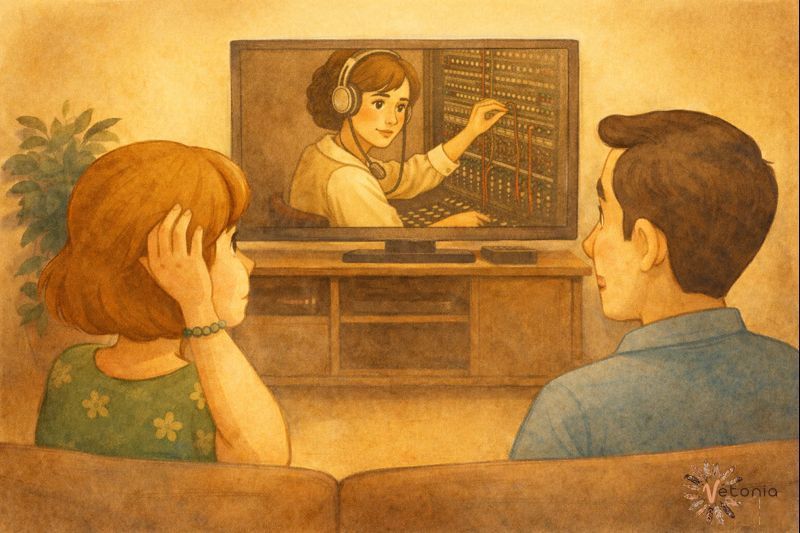
One of the ways in which I practice my Spanish listening comprehension skills is by watching movies and TV shows in Spanish.
I can read Spanish fairly well and write it decently well, but listening to my non-native language makes me feel like I haven’t been taking one-on-one classes with a native Spanish teacher online for the last four years!
But before I recommend a handful of movies and TV that are (reasonably) easy to understand if you’re learning Spanish (at level B1 or higher), let me briefly go over the main learning modalities.
Learning Styles
The common modalities or learning styles that people use to learn anything (not just languages) generally fall into these categories:
- 👀 Visual learning (diagrams, charts, maps, infographics, videos, demonstrations, color-coding, mind maps)
- 👂 Auditory learning (lectures, podcasts, audiobooks, explanations out loud, discussion, “talking it through”)
- 📘 Reading & writing (text-based) (books, articles, manuals, note-taking, summaries, flashcards, journaling)
- 🫲 Kinesthetic / hands-on learning (practicing a skill, building, cooking, labs, roleplay, simulations, doing the task)
Over the years of learning Spanish, I have found that for me, auditory learning is my weakest skill. For instance, if I read an explanation about when to use subjunctive versus indicative with a couple example sentences, I can absorb it much more easily than if someone verbally tells me the same explanation.
So I’m more or less a C1 at reading Spanish, but a B1 (or sometimes, quite frankly, an A1) at listening and understanding it, particularly when in a group of native Spanish speakers. This is why I have upped my listening comprehension—and one of the ways I do that is by watching Spanish TV shows and movies, as well as listening to Spanish podcasts.
Spanish TV Shows I Recommend
These are the Spanish TV shows that I have found relatively easy to follow along nowadays. But if it’s still too difficult to understand, as it was for me in the beginning (and even sometimes now), put on Spanish subtitles.
La casa de papel (Money Heist)
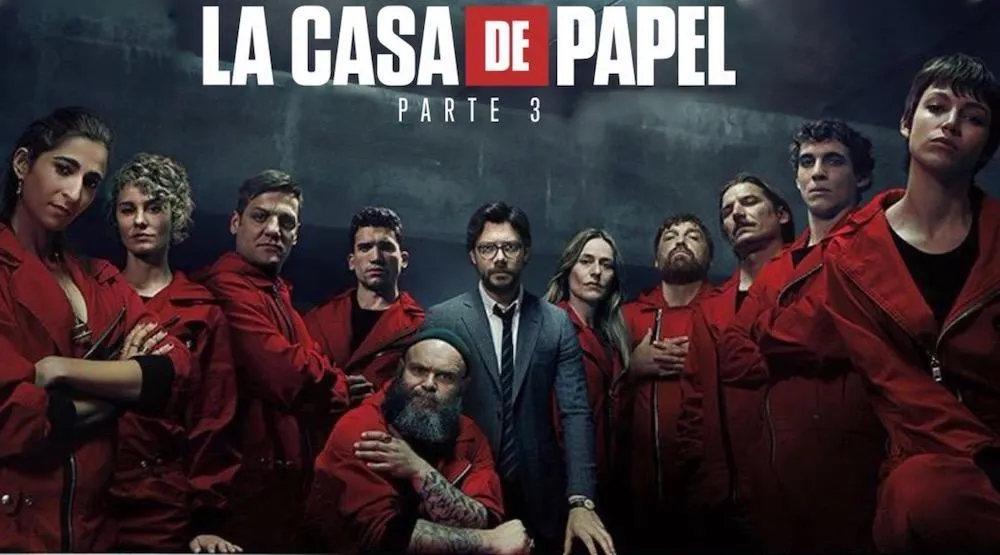
La casa de papel (Money Heist) is a Spanish crime thriller series about a mysterious mastermind known as “The Professor” who recruits a team of criminals to pull off an elaborate heist. The story starts with their plan to break into Spain’s Royal Mint and print billions of euros (rather than steal existing cash), while negotiating with police and keeping hostages inside. It’s told with lots of jumpy timelines, planning-vs-chaos twists, and heavy focus on relationships within the crew (and between the crew and the authorities).
Why I find this relatively easy to understand: Because it’s an action crime thriller, it means it’s not dialogue-heavy. Typically there is some dialogue and then plenty of silence (well, with music) as the team of criminals gets to work, then a bit more dialogue, then more action.
Las chicas del cable (Cable Girls)
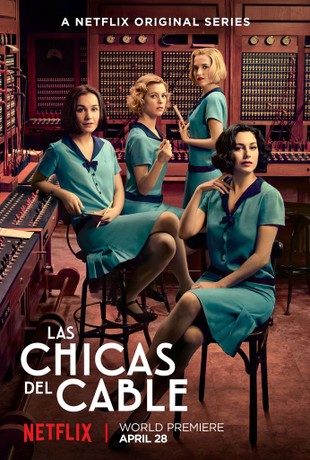
Las chicas del cable (Cable Girls) is a Spanish period drama set in late-1920s Madrid, centered on a group of young women who start working at the city’s brand-new telephone company—a modern, “respectable” job that also puts them at the center of a rapidly changing society.
The story kicks off when Lidia joins the company under a hidden identity, pulled by both personal motives and a complicated past. As she bonds with other operators—each dealing with their own constraints around love, marriage, class, family and independence—the show becomes a mix of female friendship in a male-dominated world, romance, and social change (women’s rights, work, power and personal freedom).
Why I find this relatively easy to understand: Because it takes place in the 1920s, the language uses more “proper” speech: clearer sentence structure, fewer clipped phrases, less heavy slang, fewer super-casual fillers (for example: en plan, o sea, ¿sabes? which means “Like, I mean, you know?”). These shows also tend to have cleaner diction and less overlapping chatter than modern-day shows trying to sound “real.”
Alta mar (High Seas)
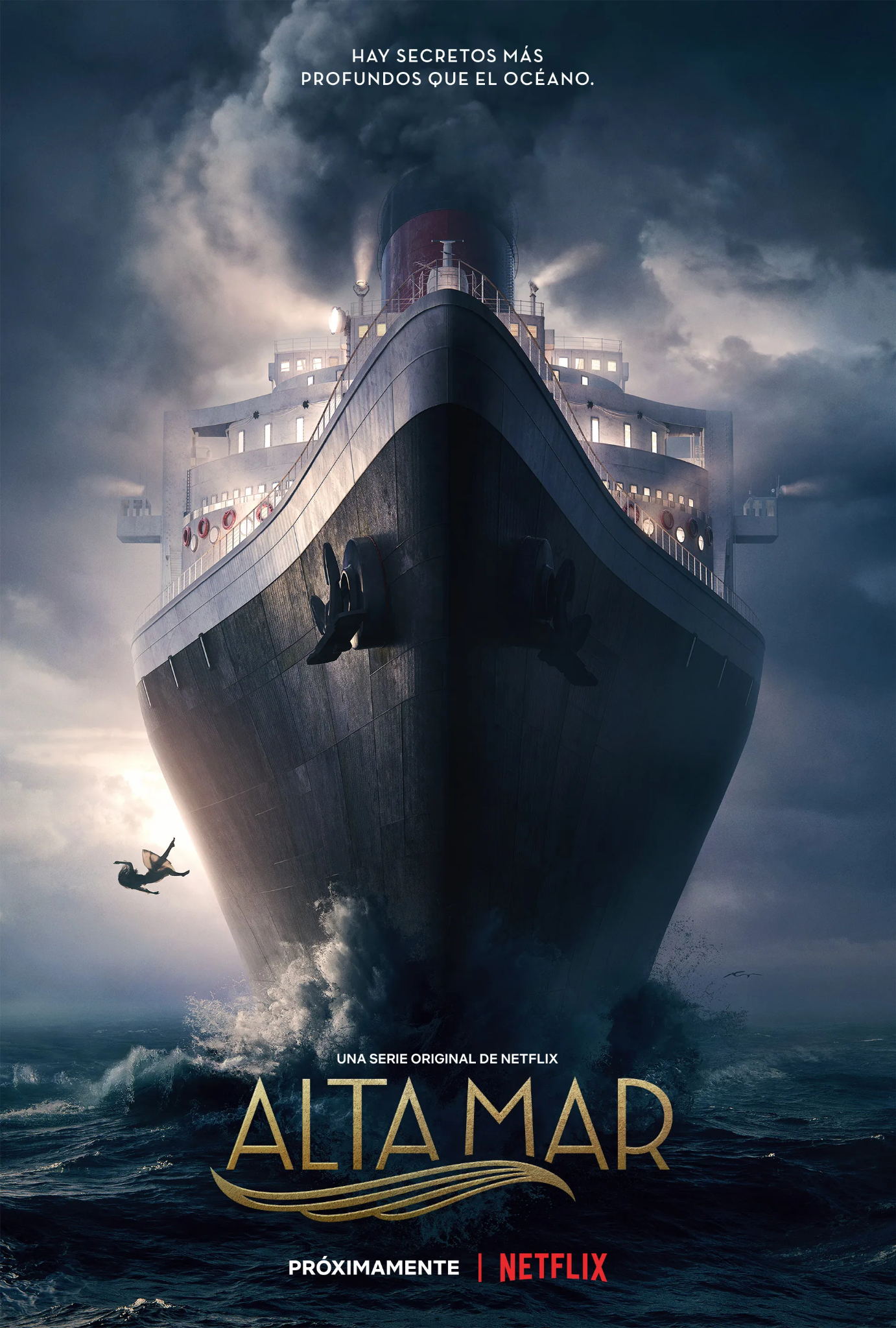
Alta mar (High Seas) is a Spanish mystery/thriller set in the late 1940s on a luxury ocean liner traveling from Spain to Brazil. Two sisters (Carolina and Eva) board the ship, and shortly after departure a body is discovered—but what baffles everyone is that the victim isn’t on the passenger list. As the ship keeps moving (with nowhere to escape), the sisters start digging into secrets among the passengers and crew. The show digs into hidden identities, class tensions, romances and conspiracies.
Why I find this relatively easy to understand: Much like Las chicas del cable, because this is a period piece, it tends to have fairly “neat” diction and less slangy than contemporary shows. Modern shows are usually more colloquial, that is, people drop words (“pa’” for “para”), contract, interrupt themselves, trail off, and use fragments,
El tiempo entre costuras (The Time in Between)

El tiempo entre costuras (The Time in Between) is a Spanish espionage drama about Sira Quiroga, a young seamstress, whose life gets upended on the eve of the Spanish Civil War (1936-1939).. She leaves Madrid for Morocco after falling for the wrong man, gets stranded with debts and no options, and ends up rebuilding her life through her talent for dressmaking. She eventually runs a couture atelier (high-fashion workshop/studio; taller de alta costura) that caters to powerful, well-connected clients. This pulls her into the political undercurrents of the era and she’s recruited into spy work, using her access (and her sewing skills) as cover while Europe slides toward WWII.
Why I find this relatively easy to understand: Again, because this is a period piece (I just realized the pattern to my Spanish-show preferences!), their tends to be less overlap in dialogue and better enunciation. Modern series often have people talking over each other, shouting across rooms, speaking while moving, etc. Costuras has lots of one-on-one dialogue, quieter interiors and “turn-taking” conversation. Also, the audio mix is cleaner. Period dramas often keep dialogue more front-and-center and don’t drown it in loud music, street noise or “realistic” background sound.
Spanish Movies I Recommend
There are plenty of online resources to learn Spanish, but these are the Spanish movies that I have found relatively easy to follow along. If these are too difficult for you to understand, put on Spanish subtitles.
El hoyo (The Platform)
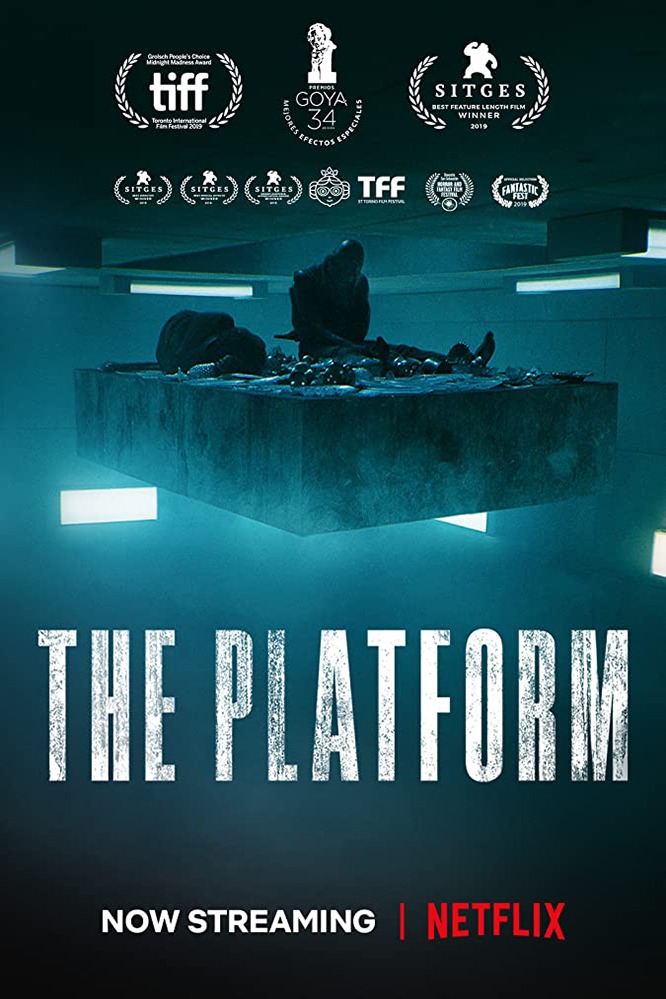
El hoyo (The Platform) is a Spanish dystopian sci-fi thriller set in a vertical prison. Prisoners are housed two per level, and once a day a giant platform of food descends from the top floor to the bottom. The catch: The people on the upper levels can eat as much as they want (often wasting or contaminating food), so by the time the platform reaches the lower levels there may be little to nothing left. Every month, prisoners are randomly reassigned to different levels, so someone who feasted last month might be starving this month. The story follows Goreng, a new inmate who tries to survive—and eventually tries to change the system.
Why I find this relatively easy to understand: Given the premise—two prisoners per level, and trying to survive, no less—their isn’t a lot of heavy, fast or overlapping dialogue.
A pesar de todo (Despite Everything)
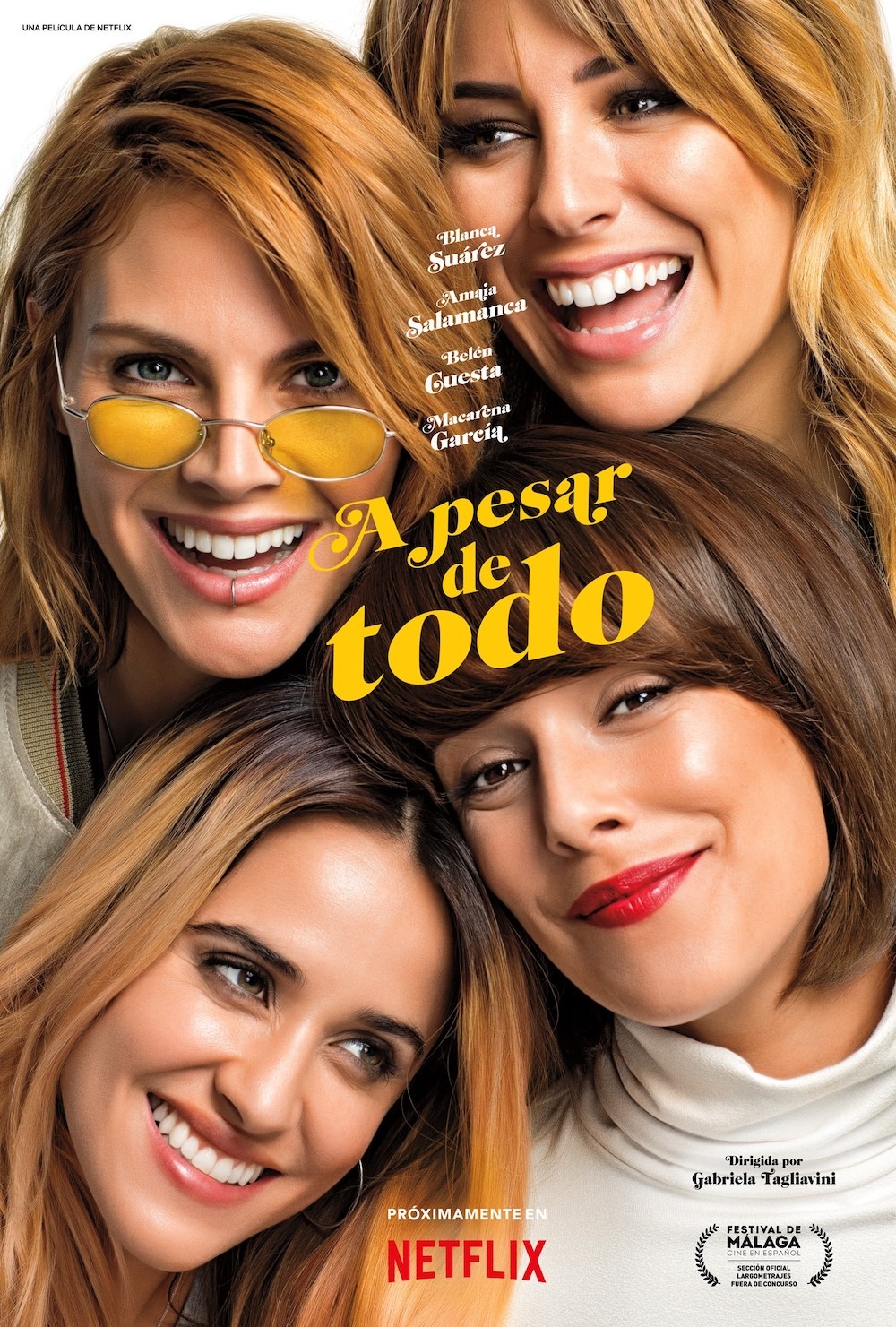
A pesar de todo (Despite Everything) is a Spanish comedy-drama film about four sisters who reunite after their mother dies—only to discover a big secret: the man they thought was their father is not their biological father. The sisters, with very different personalities and lifestyles, team up to investigate their mom’s past and figure out who their real father is, which turns into a messy (and funny) mix of family tension, old resentments, romance and unexpected bonding.
Why I find this relatively easy to understand: To be honest, this was a little more difficult to keep up with, so I had to put on Spanish subtitles as I was watching it in Spanish. The difficulty here is that, unlike most of the other shows and movies on this list, these four modern sisters speak fast, use slang and often interrupt each other. But the story was easy to follow along and it was a fun watch.
Mujeres al borde de un ataque de nervios (Women on the Verge of a Nervous Breakdown)
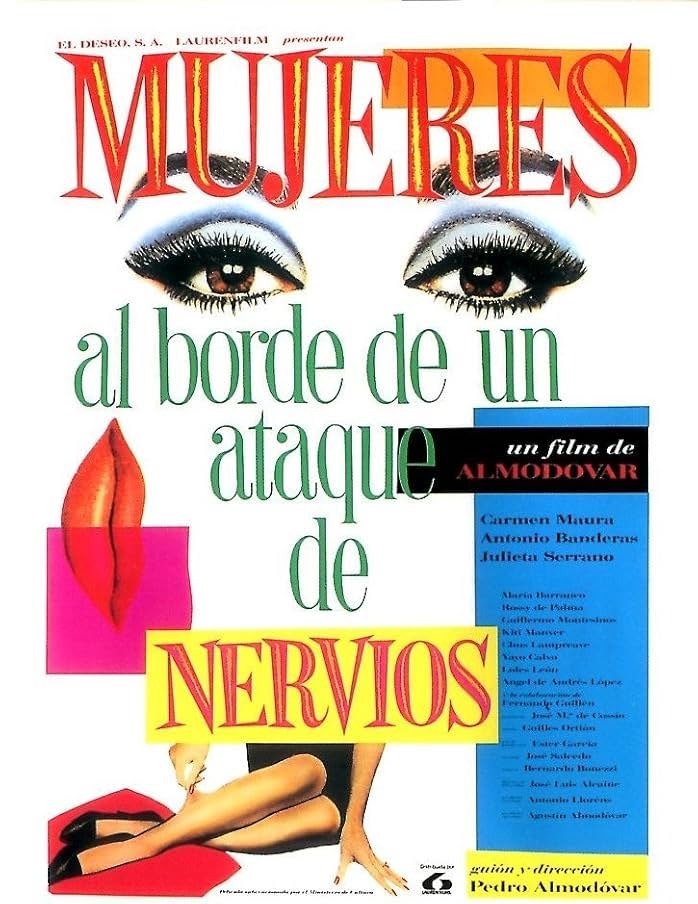
Mujeres al borde de un ataque de nervios (Women on the Verge of a Nervous Breakdown) is a fast, colorful Spanish farce/comedy about a voice actor, Pepa, whose lover Ivañ suddenly disappears—and she spirals into a chaotic day trying to track him down and get answers. As Pepa tries to reach him, her apartment becomes a magnet for disaster: at various points during the day, Ivañ’s terrified ex-wife, his insecure son (played by a very young Antonio Banderas), and her best friend, who is mixed up with some shady people, show up at her place. This is a Pedro Almodóvar film so the vibe is stylish, manic and very funny—with Almodóvar’s signature energy.
Why I find this relatively easy to understand: I must admit that I’ve seen this film several times, so it’s become easier to understand over time. Still, it’s such a fun movie that you’ll want to understand every word and therefore will force your brain to do its best!
Other Recommendations for Better Listening Comprehension
Another thing I’ve been doing to strengthen my Spanish audio comprehension is to watch English-language movies and TV shows dubbed in Spanish. This way, I’m already familiar with the plot and characters, so I’m not also having to try to figure out what’s going on. I just have to concentrate on the language. The key here is to choose movies and shows that are not dialogue-heavy, like Seinfeld or Friends.
And, finally, I do the same thing with books. Find an audiobook version that is read in Spanish (again, so I’m already a step ahead re: the plot and characters), and, if your app allows it, adjust the speed to a little slower than normal.
So there you have it. Watching movies and TV shows in the language you are trying to learn not only allows you to practice your listening comprehension, but it gives you a taste of the Spanish of everyday life, too.


0 Comments