Discourse markers (like venga, vale, anda, bueno, a ver, pues) are little “extra” words that don’t add much new info, but do a lot of conversational work: they signal agreement, soften disagreement, buy you time, mark transitions, and show reactions like disbelief or surprise.
Think of them as the traffic signals of Spanish—less about content and more about natural flow. They’re especially common in Spain because fast, overlapping conversation needs quick tools to manage tone and keep speech sounding natural, not textbook-stiff.
So if you’re learning Spanish and you’ve been confused by (or just ignoring) these “little words,” I’ll give you three discourse marker cheat sheets:
- ¡Venga! Spanish Discourse Markers (part 1 — read here)
- ¡Vale! Spanish Discourse Markers (part 2 — this one)
- ¡Anda! Spanish Discourse Markers (part 3)
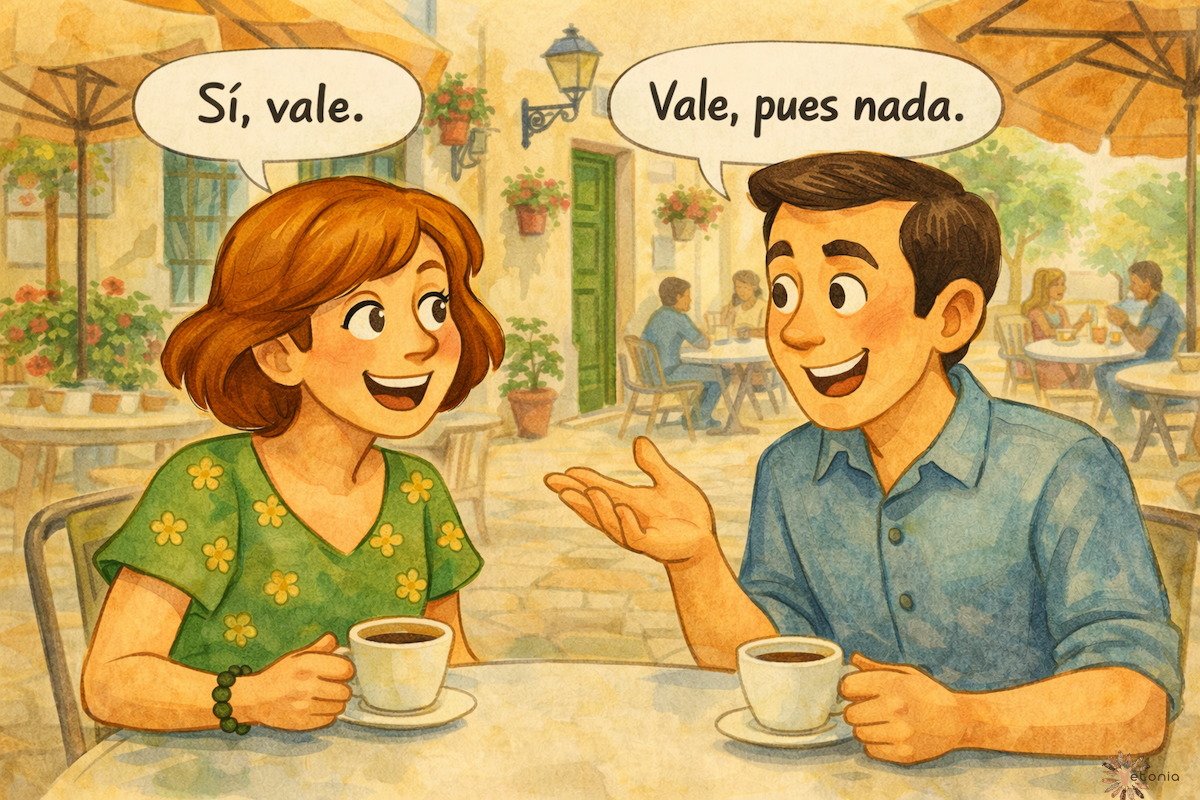
Example Conversation with Discourse Marker Vale
Vale is the Swiss Army knife of agreement in Spain. It can mean “OK,” “fine,” “enough,” “I’m listening,” or “yeah right,” depending on intonation.
Here’s an example of a natural Spanish conversation using the discourse marker “vale”:
- —Irene: Quedamos a las siete en el sitio de siempre.
- —Javi: Vale.
- —Irene: Y traes las entradas, ¿vale?
- —Javi: Sí, sí, vale.
- —Irene: Porque la última vez…
- —Javi: Vale, ya… pero fue un lío.
- —Irene: Vale, pero… no me hagas repetirlo.
- —Javi: Vale, entiendo, pero… tú tampoco me lo recuerdes cada cinco minutos.
- —Irene: (ríe) Vale, perfecto. Entonces nos vemos allí.
- —Javi: Vale, pues nada, hablamos luego.
- —Irene: Vale, nos vemos.
- —Javi: Vale, venga.
English:
- —Irene: Let’s meet at seven at our usual place.
- —Javi: Okay.
- —Irene: And you’re bringing the tickets, okay?
- —Javi: Yeah, yeah, okay.
- —Irene: Because last time…
- —Javi: Okay, yeah… but it was a mess.
- —Irene: Okay, but… don’t make me repeat it.
- —Javi: Okay, I get it, but… you don’t need to remind me every five minutes.
- —Irene: (laughs) Okay, perfect. So I’ll see you there.
- —Javi: Alright then, we’ll talk later.
- —Irene: Okay, see you.
- —Javi: Okay—right, let’s go.
Common Uses of Discourse Marker Vale
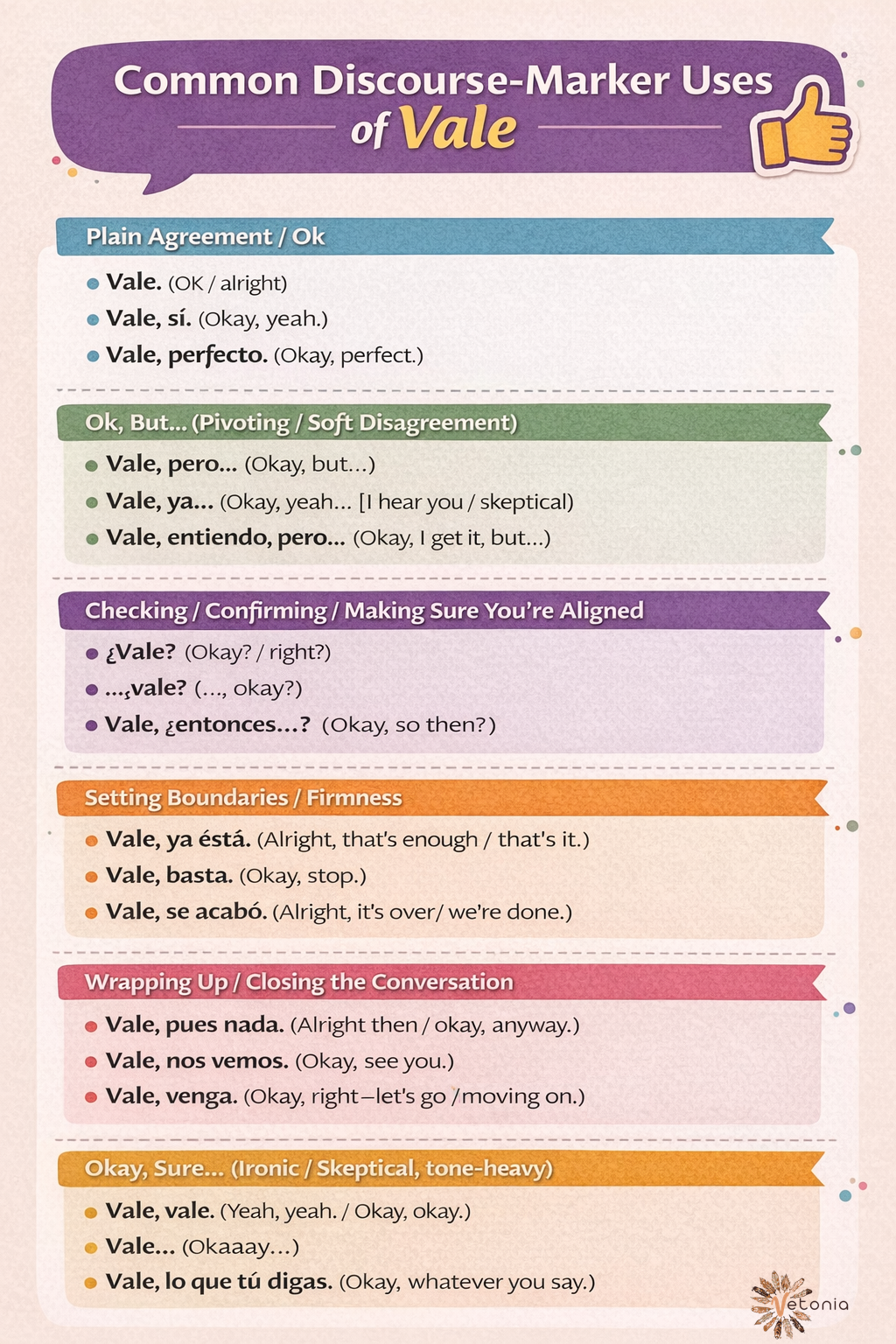
These are common Castilian-Spanish discourse markers that use vale, grouped by what they do in conversation:
1) Plain agreement / “OK”
- Vale. (OK / alright)
- Vale, sí. (Okay, yeah.)
- Sí, vale. (Yeah, okay.)
- Vale, perfecto. (Okay, perfect.)
- Vale, genial. (Okay, great.)
2) “OK, but…” (pivoting / soft disagreement)
- Vale, pero… (Okay, but…)
- Vale, ya… (Okay, yeah… [I hear you / skeptical])
- Vale, entiendo, pero… (Okay, I get it, but…)
- Vale, lo compro… pero… (Okay, I’ll buy that… but…)
3) Checking / confirming / making sure you’re aligned
- ¿Vale? (Okay? / right?)
- …¿vale? (tag at the end to check understanding: “…, okay?”)
- Vale, ¿entonces…? (Okay, so then…?)
- Vale, o sea… (Okay, like… / I mean…)
4) Setting boundaries / firmness (often parent-to-child / manager-to-team)
- Vale, ya está. (Alright, that’s enough / that’s it.)
- Vale, basta. (Okay, stop.)
- Vale, se acabó. (Alright, it’s over / we’re done.)
- Vale, hasta aquí. (Okay, up to here.)
5) Wrapping up / closing the conversation
- Vale, pues nada. (Alright then / okay, anyway.)
- Vale, pues ya me dices. (Okay, let me know.)
- Vale, hablamos. (Okay, we’ll talk.)
- Vale, nos vemos. (Okay, see you.)
- Vale, venga. (Okay, right—let’s go / moving on.)
6) “Okay, sure…” (ironic / skeptical, tone-heavy)
- Vale, vale. (Yeah, yeah. / Okay, okay.)
- Vale… (drawn out = Okaaay…)
- Vale, lo que tú digas. (Okay, whatever you say.)
- Sí, vale. (can be genuinely “sure,” or sarcastic depending on tone)
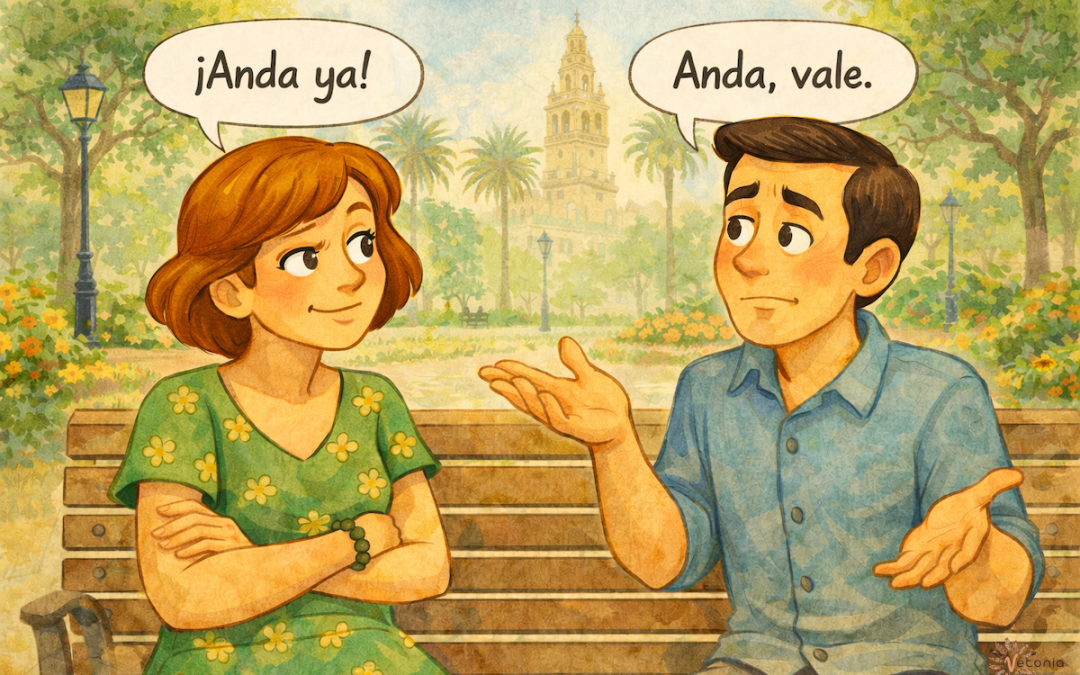
Check out Part 3: ¡Anda! Spanish Discourse Markers.
And feel free to download this cheat sheet so you can practice anywhere. You can also explore online Spanish classes & immersive courses in Spain here.
0 Comments