
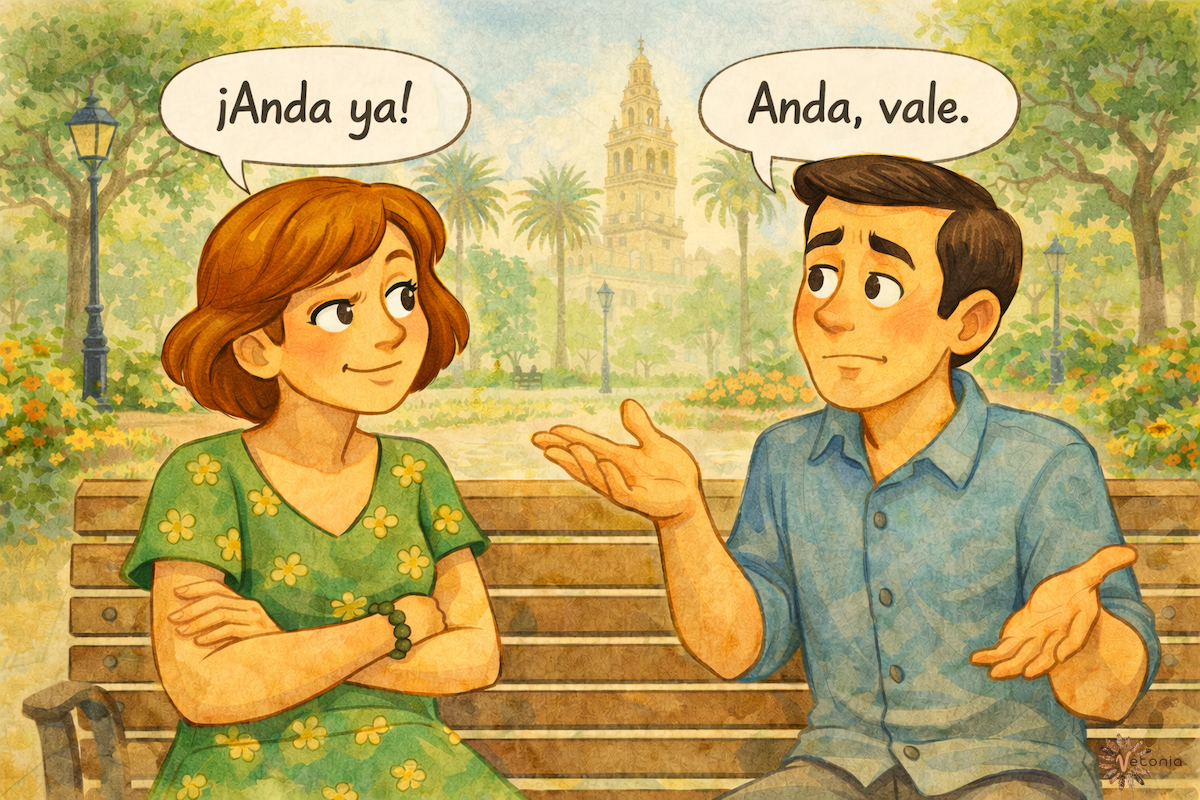
Words like venga, vale, anda, bueno, a ver and pues may seem like small or even insignificant words, but they actually do a lot of work in language. These discourse markers can show agreement, soften a point, stall for a second, shift the conversation, or add surprise, doubt, or disbelief.
In Spain, you hear them constantly because everyday conversation moves quickly and tone matters a lot. These little words help make speech sound natural and human — not like something copied from a grammar book.
If you’re not quite sure what these little words mean or how to use them, this 3-part blog series will help:
- ¡Venga! Spanish Discourse Markers (part 1 — read here)
- ¡Vale! Spanish Discourse Markers (part 2 — read here)
- ¡Anda! Spanish Discourse Markers (part 3 — this one)
Example Conversation with Discourse Marker Anda
Anda is another goldmine as a Spanish discourse marker, especially in Spain. It comes from andar (“to walk/go”), but in conversation it often works like an interjection / pragmatic marker: surprise, encouragement, disbelief, softening, urging, etc.
Keep in mind that tone matters a lot: ¡Anda! can be delighted; ¡Anda ya! is usually skeptical/annoyed.
Now, here’s an example of how a Spanish conversation using the discourse marker “anda” might sound:
- —María: ¿Has visto esto? Han cambiado el horario otra vez.
- —Sergio: ¡Anda! ¿En serio?
- —María: ¡Anda, mira! Ahora abre media hora más tarde.
- —Sergio: ¡Anda ya! Pues genial…
- —María: Bueno, anda, no pasa nada, nos tomamos un café mientras.
- —Sergio: Ya, ya… anda, por favor, qué ganas.
- —María: Anda, no exageres. Si estamos de paseo.
- —Sergio: Vale, vale.
- —María: Anda, vamos, que si no luego se llena.
- —Sergio: Anda, vale. Pero tú eliges el sitio.
- —María: Hecho. Anda, date prisa.
In English:
- —María: Did you see this? They changed the schedule again.
- —Sergio: No way! Seriously?
- —María: Oh look! Now it opens half an hour later.
- —Sergio: Oh, come on! Great…
- —María: Well, it’s no big deal, we’ll grab a coffee while we wait.
- —Sergio: Yeah, yeah… oh please, I’m thrilled.
- —María: Come on, don’t exaggerate. We’re out for a walk.
- —Sergio: Okay, okay.
- —María: Come on, let’s go, or it’ll be packed later.
- —Sergio: Alright, fine. But you pick the place.
- —María: Deal. Come on, hurry up.
You may also like: Best Spanish Movies & TV Shows to Improve Your Listening Comprehension
Common Uses of Discourse Marker Anda
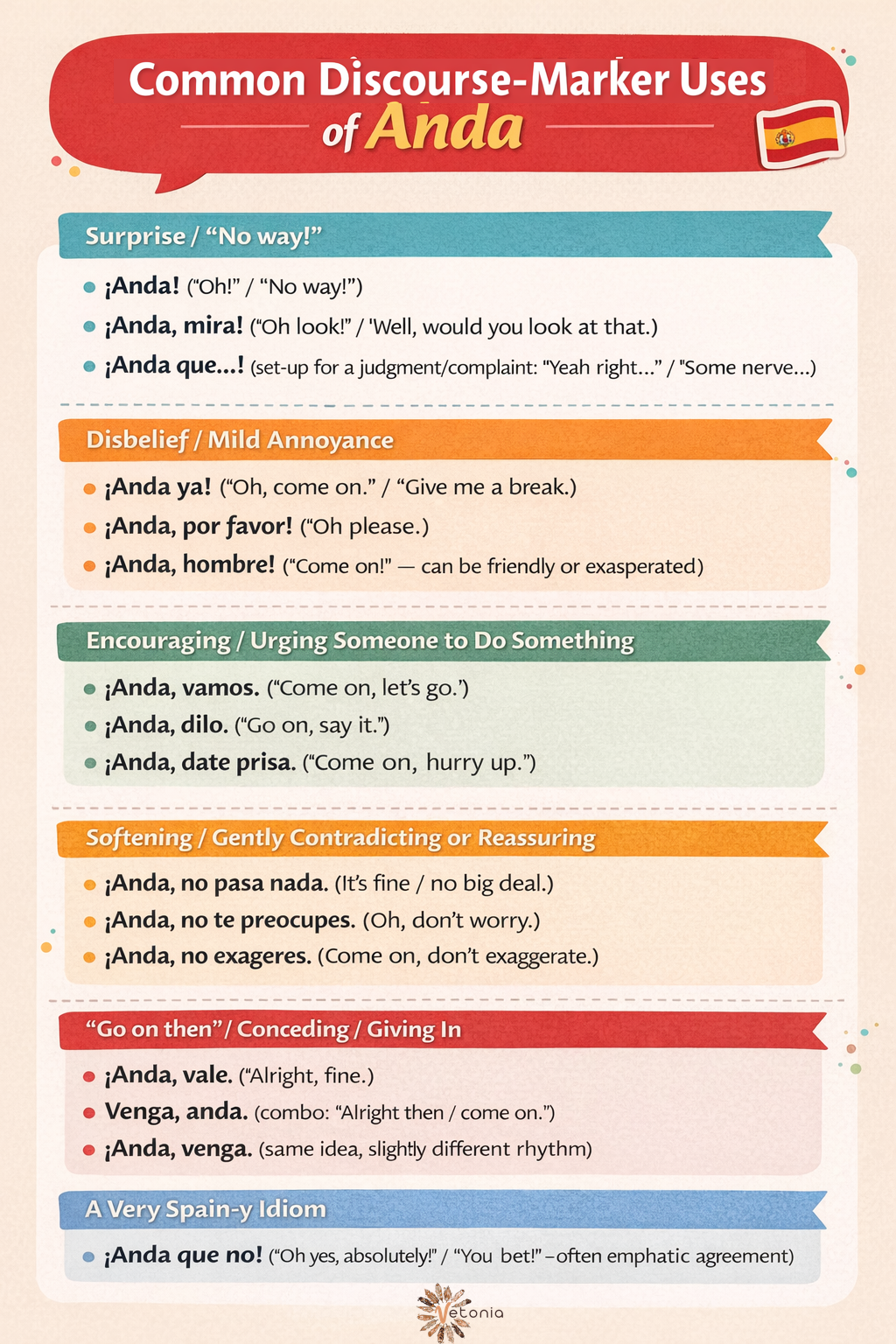
Here are common anda-based markers, grouped by vibe:
Surprise / “No way!”
- ¡Anda! (Oh! / No way!)
- ¡Anda, mira! (Oh look! / Well, would you look at that.)
- ¡Anda que…! (set-up for a judgment/complaint: Yeah right… / Some nerve…)
Disbelief / mild annoyance
- ¡Anda ya! (Oh, come on. / Give me a break.)
- ¡Anda, no me digas! (No way—really?)
- ¡Anda, por favor! (Oh please.)
- ¡Anda, hombre! (Come on! — can be friendly or exasperated)
Encouraging / urging someone to do something
- Anda, ven. (Come on, come here.)
- Anda, dilo. (Go on, say it.)
- Anda, pásame eso. (Here, pass me that. — softens the command)
- Anda, vamos. (Come on, let’s go.)
- Anda, date prisa. (Come on, hurry up.)
Softening / gently contradicting or reassuring
- Anda, no te preocupes. (Oh, don’t worry.)
- Anda, no pasa nada. (It’s fine / no big deal.)
- Anda, no exageres. (Come on, don’t exaggerate.)
“Go on then” / conceding / giving in
- Anda, vale. (Alright, fine.)
- Venga, anda. (combo: Alright then / come on.)
- Anda, venga. (same idea, slightly different rhythm)
A very Spain-y idiom
- ¡Anda que no! (Oh yes, absolutely! / You bet! — often emphatic agreement)
If you missed it, check out Part 1: ¡Venga! Spanish Discourse Markers.
If you’re eager to improve your Spanish or start learning it, check out our online Spanish classes with native teachers who can adapt to whatever level you are at, or our immersive courses in Spain where you’ll learn the language in a natural environment full of authentic culture!
By the way, the “¡Venga, vale, anda!” in the title of this blog means: “Alright, okay then, come on!” (In the tone of wrapping up + nudging someone to move.)
0 Comments