Christmas Traditions: Spain vs. United States/Canada
This will be my second Christmas in Spain, but my first celebrating it with a Spanish boyfriend and some of his non-English-speaking family. If I wanted to learn Spanish through unique cultural experiences, boy was this the opportunity! Coming from Canada by way of the United States, I’m used to a particular type of celebration.
There certainly is a lot of overlap, but here are the differences I’ve noticed between Christmas in Spain and Christmas in the U.S./Canada—the traditions, the timeline, the food and some key words and phrases.
Gift-giving: Santa isn’t the only star
In Spain:
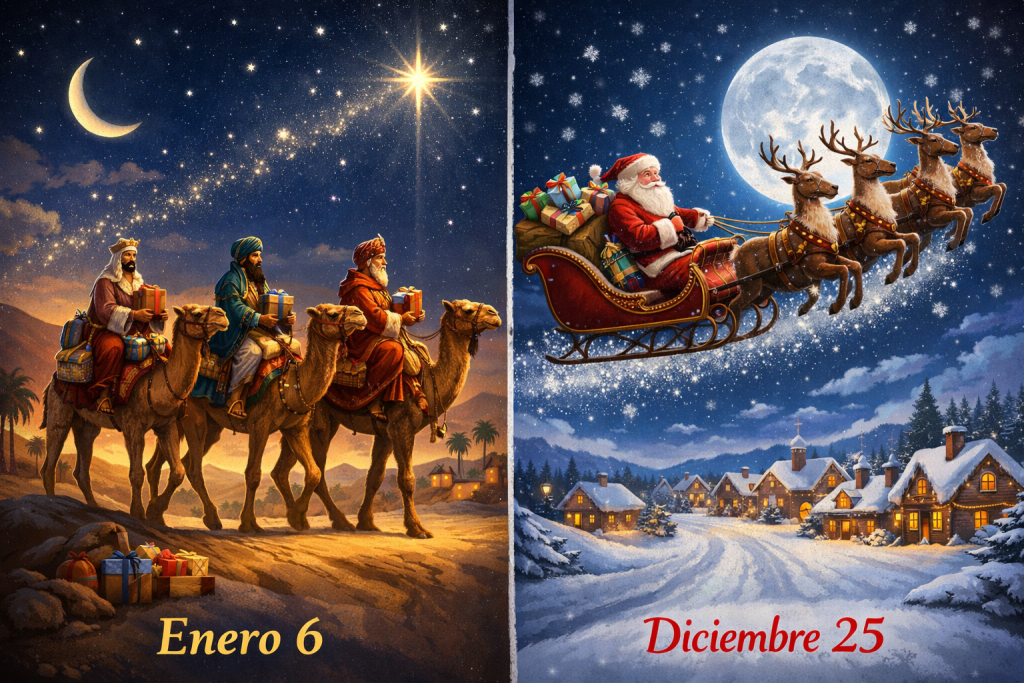
Many kids grow up with Los Reyes Magos (The Three Kings or, as we call them in North America, The Three Wise Men) bringing gifts on Jan 6, although these days more families also do Papá Noel on Dec 25. On the night of Jan 5, Melchor, Gaspar and Baltasar travel through Spain—traditionally on camels—and leave gifts for children. Kids often set out their shoes (and sometimes snacks for the Kings and water/food for the camels), and the naughty kids receive carbón (“coal”), which is often sweet coal candy.
In U.S./Canada:
Santa Claus is the central character who delivers presents during the night of Dec 24 by riding through the air on a sleigh pulled by reindeer, including Rudolph the Red-Nosed Reindeer. Kids leave cookies and milk for Santa (and sometimes carrots for the deer), who comes down the chimney to leave gifts in the stockings hung on the fireplace.
El tamborilero (Spanish version of “The Little Drummer Boy”)
Arre borriquito
Hacia Belén va una burra (Rin, rin)
Ay del Chiquirritín
Dime Niño
U.S./Canada Christmas carols
Traditional:
Silent Night
Hark! The Herald Angels Sing
Joy to the World
O Come All Ye Faithful
The First Noel
Deck the Halls
Kid/family staples:
Jingle Bells
Rudolph the Red-Nosed Reindeer
Frosty the Snowman
Radio/pop standards:
White Christmas
It’s Beginning to Look a Lot Like Christmas
Rockin’ Around the Christmas Tree
Let It Snow! Let It Snow! Let It Snow!
All I Want for Christmas Is You (Mariah Carey)
Last Christmas (Wham!)
Public traditions: Spain feels more “out in the streets”
In Spain:
There are major shared, public traditions—especially the Cabalgata de Reyes (Jan 5) parade, where kids line the streets and candy is tossed. Nativity scenes (belén/nacimiento) are also a big deal in many places, and Christmas markets pop up in a lot of plazas.
In U.S./Canada:
The public side is more about Christmas lights (including on houses, and it’s common to drive around to see all the decorations), shopping and the “mall Santa” in which families bring their kids to meet Santa Claus in person, sit on his lap and tell him what they want for Christmas. But the core rituals tend to feel more home-centered.
“Extra days” you don’t expect
In Spain:
Dec 28 is Día de los Santos Inocentes, a prank day (like April Fools). It originates from the tragic story in the bible of King Herod ordering the slaughter of all boys two and under in Bethlehem in an attempt to kill the baby Jesus, making them the “Holy Innocents.” After a prank, the joker often shouts “¡Inocente!” (Innocent!). Trust the Spaniards to find a way to transform a solemn historical day into a lighthearted day of shared laughter.
In Canada:
Dec 26 is Boxing Day, originated in the 1700s as a day in which the wealthy gave a “Christmas box” of gifts like food (often their leftover Christmas dinner) to servants or tradespeople. These days it’s just an extra day off for most people.
In U.S./Canada:
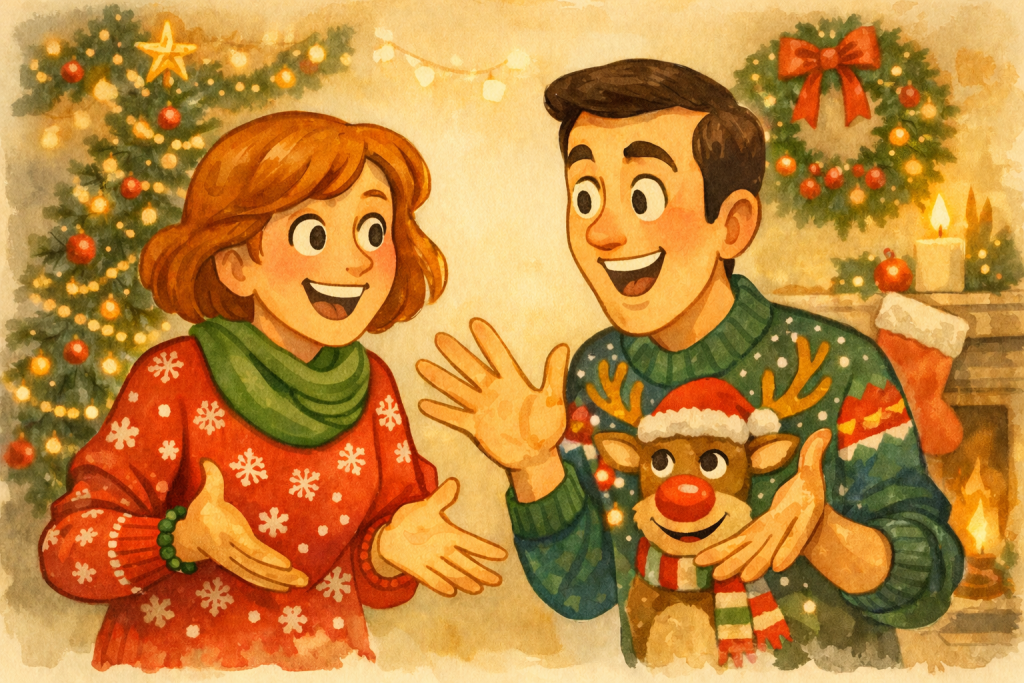
Ugly Christmas sweater – a festive (and ironic) tradition in which people gift others (and wear!) the ugliest Christmas-themed sweaters they can find.
New Year’s: grapes vs. a countdown
In Spain:
12 grapes at midnight on New Year’s Eve (las uvas)—one per chime—for luck.
In U.S./Canada:
A countdown, champagne toast, and the classic “new year, new me” vibe.
Key Christmastime words & phrases
Encouraging / getting things moving
Christmas tree — El árbol de Navidad
Stocking — El calcetín / La bota
Christmas lights — Las luces navideñas
Snowman — Muñeco de nieve
Christmas wreath — Corona de Navidad
Decorations / ornaments — Adornos
Tinsel — Espumillón
Mistletoe — Muérdago
Christmas Eve — Nochebuena
Christmas carols — Villancicos
Nativity scene — Belén / Nacimiento
Epiphany — Día de Reyes
The Three Kings / The Three Wise Men — Los Reyes Magos
Santa Claus — Papá Noel
Christmas dinner — La cena de Navidad
Dec 24 Christmas dinner — La cena de Nochebuena
Christmas Day lunch — La comida de Navidad
Christmas card — Tarjeta de Navidad
Present — Regalo
Christmas spirit — El espíritu navideño
Sleigh — El trineo
Bells — Las cascabeles
Reindeer — Los renos
Advent calendar — El calendario de adviento
New Year’s Eve — Nochevieja
The (12) grapes — Las uvas
These have no meaning in Spain, but are very common in North America:
Eggnog (Ponche de huevo)
Ugly Christmas sweater (Suéter navideño feo)
Boxing Day (El Boxing Day—el día después de Navidad—solo en Canada y El Reino Unido)
Do you want to put this into practice?
Experience the language in a real-world context and learn faster