9 Spanish Adjectives That Change Meaning by Position
In all my Spanish classes, I learned time and again that adjectives come after the noun.
So “the red car” is el coche rojo, NOT el rojo coche.
And “the Spanish language” is el idioma español, NOT el español idioma.
But more recently I learned that sometimes the adjectives come before the noun, usually for stylistic or emotional reasons.
Adjective + Noun = Literary/Stylistic
For example: Admiró el bello y luminoso día.“She admired the beautiful and luminous day.”
When you use the normal Spanish structure noun + adjective, the above sentence would be el día bello y luminoso. This normal structure treats the adjectives as objective descriptions, almost like listing qualities.
But when you put the adjectives before the noun, you are emphasizing emotion or a poetic tone. As in el bello y luminoso día, which feels more like the narrator (because I read this in a novel) is experiencing the beauty, not just describing it. This structure is more common in literature than in spoken Spanish when the writer wants to create imagery or mood.
If you think of the difference in English, it might sound like:
“the beautiful day” (feels emotional or subjective)
“the day that was beautiful” (more descriptive or factual)
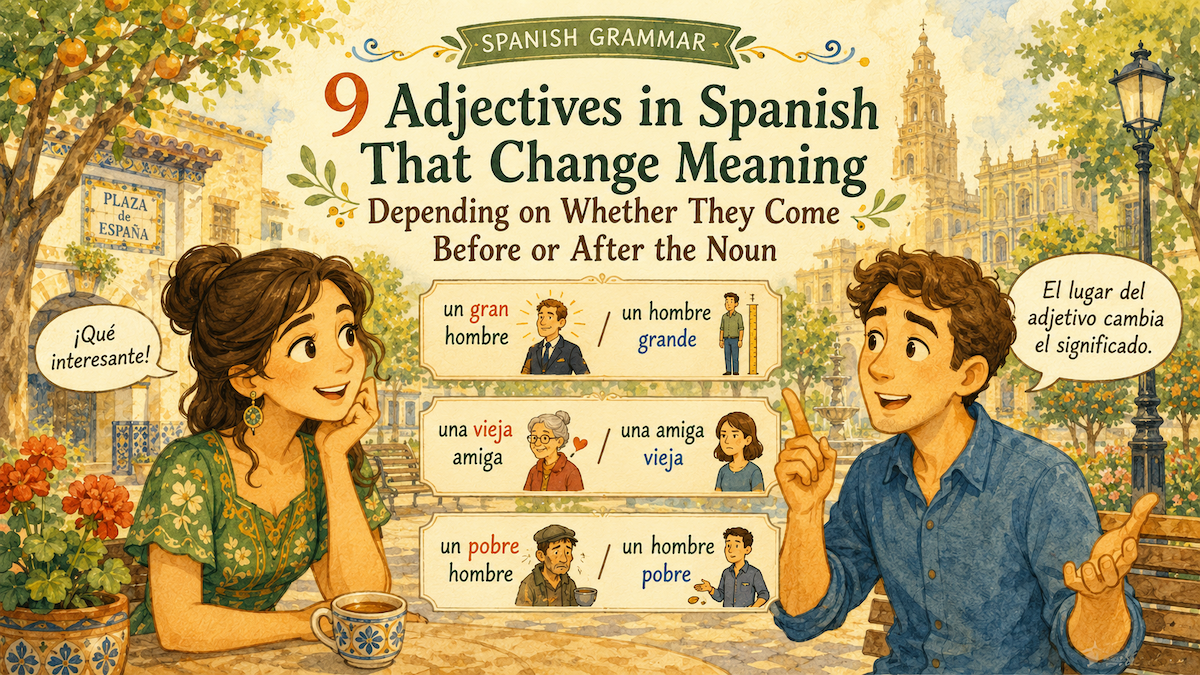
9 Adjectives in Spanish That Change Meaning Depending on Whether They Come Before or After the Noun
Putting the adjective(s) before the noun for literary reasons was something I could understand. But then I learned of one more interesting use of this structure.
Sometimes moving the adjective changes the meaning completely:
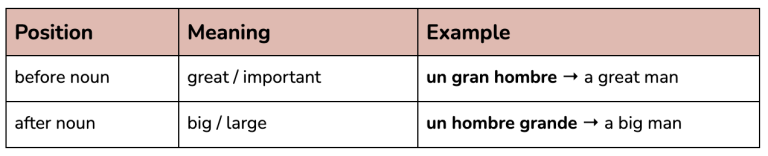
un hombre grande = a big/tall man
un gran hombre = a great man
So, here are nine adjectives in Spanish that commonly change meaning depending on whether they come before or after the noun.
1) Grande
Note:grande turns to gran before singular nouns.
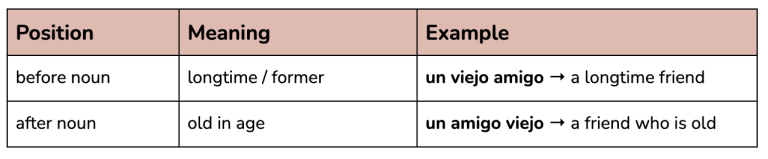
2) Viejo
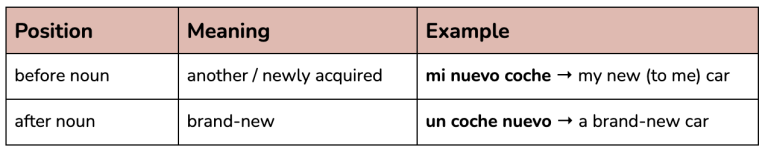
3) Nuevo
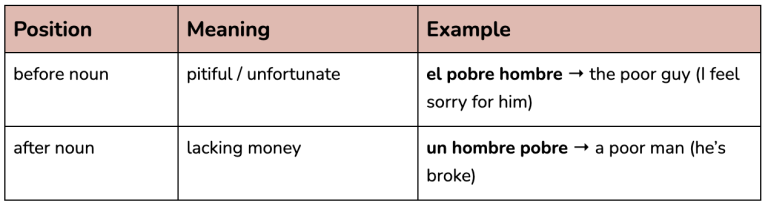
4) Pobre
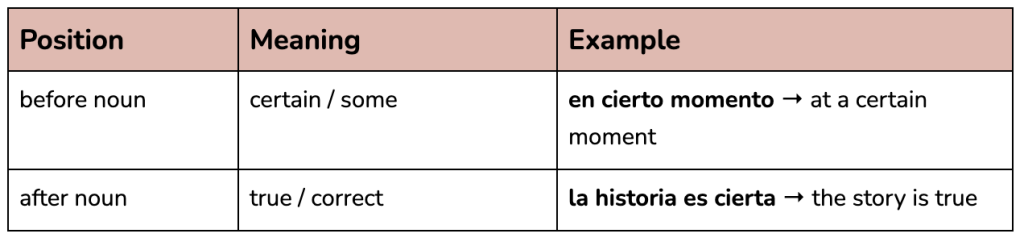
5) Cierto
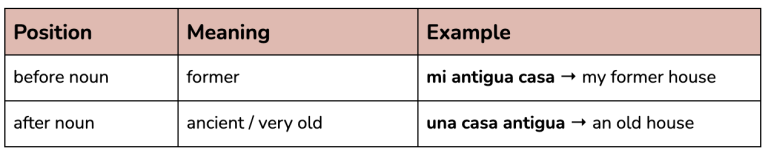
6) Antiguo
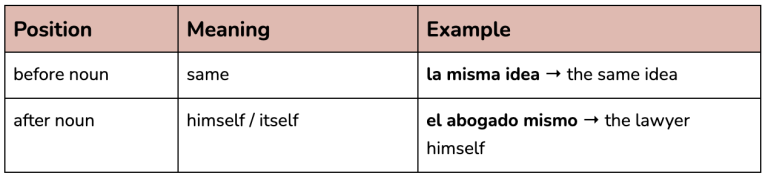
7) Mismo
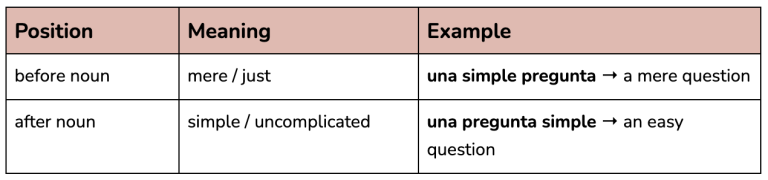
8) Simple
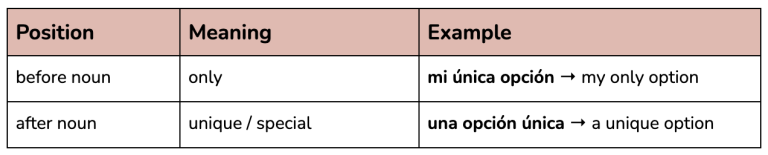
9) Único
One last thing.
Although the adjective + noun formula is usually for written Spanish, there is a small group of adjectives that often go before the noun in spoken Spanish when expressing a feeling, evaluation or emphasis.
Adjective + noun examples you might hear in conversation:
¡Qué bonito día! — What a beautiful day!
Es un gran problema. — It’s a big problem. / It’s a serious problem.
Fue una terrible experiencia. —It was a terrible experience.
Es una buena idea. — It’s a good idea.
Mi querido amigo. — My dear friend.
Tuve un mal día. — I had a bad day.
Once you know how to use Spanish adjectives like pobre, viejo and cierto intentionally, you’ll start to sound less like a guiri and more like a native speaker.
But, remember, this kind of nuanced detail becomes natural with practice and guidance. If you’re ready to move beyond the basics and really get a feel for how Spanish works, it might be time to explore online Spanish classes where an expert teacher can walk you through the subtleties that textbooks often miss.
Learn Spanish with Vetonia through tailored lessons, resources and experiences.
Do you want to put this into practice?
Improve your Spanish. Experience the language in a real-world context with guided classes.